
Table of Contents
A Beautiful Website is Step 1
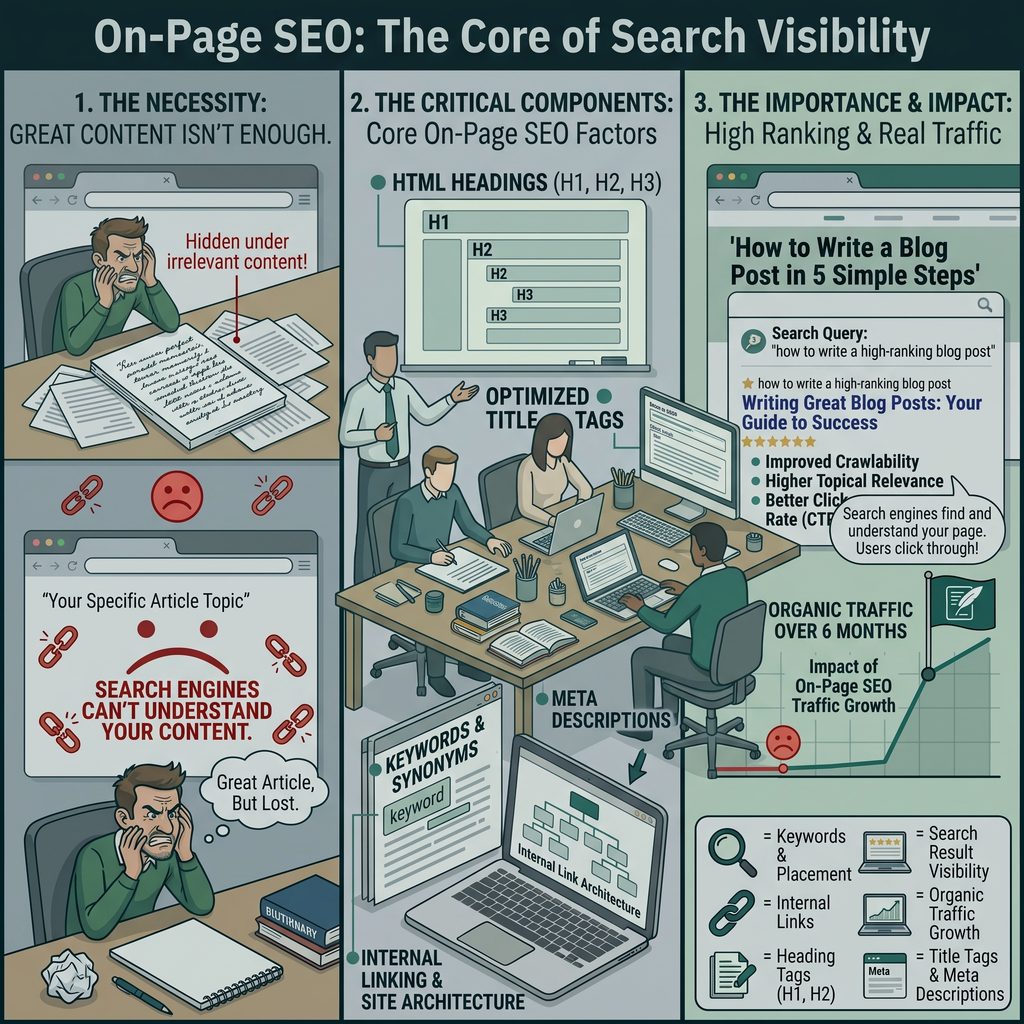
You have invested time and money into a beautiful website for your small business. The branding is crisp, the photos are professional, and the layout is modern. But weeks go by, and your phone isn’t ringing. The reality is that having a great-looking website is only half the battle; if search engines cannot understand what your pages are about, you will remain invisible to potential customers. This is where mastering on-page SEO becomes absolutely critical. At Handsome Meatball, we consider on-page optimization to be the structural foundation of your entire digital marketing strategy.
What exactly is on-page SEO?
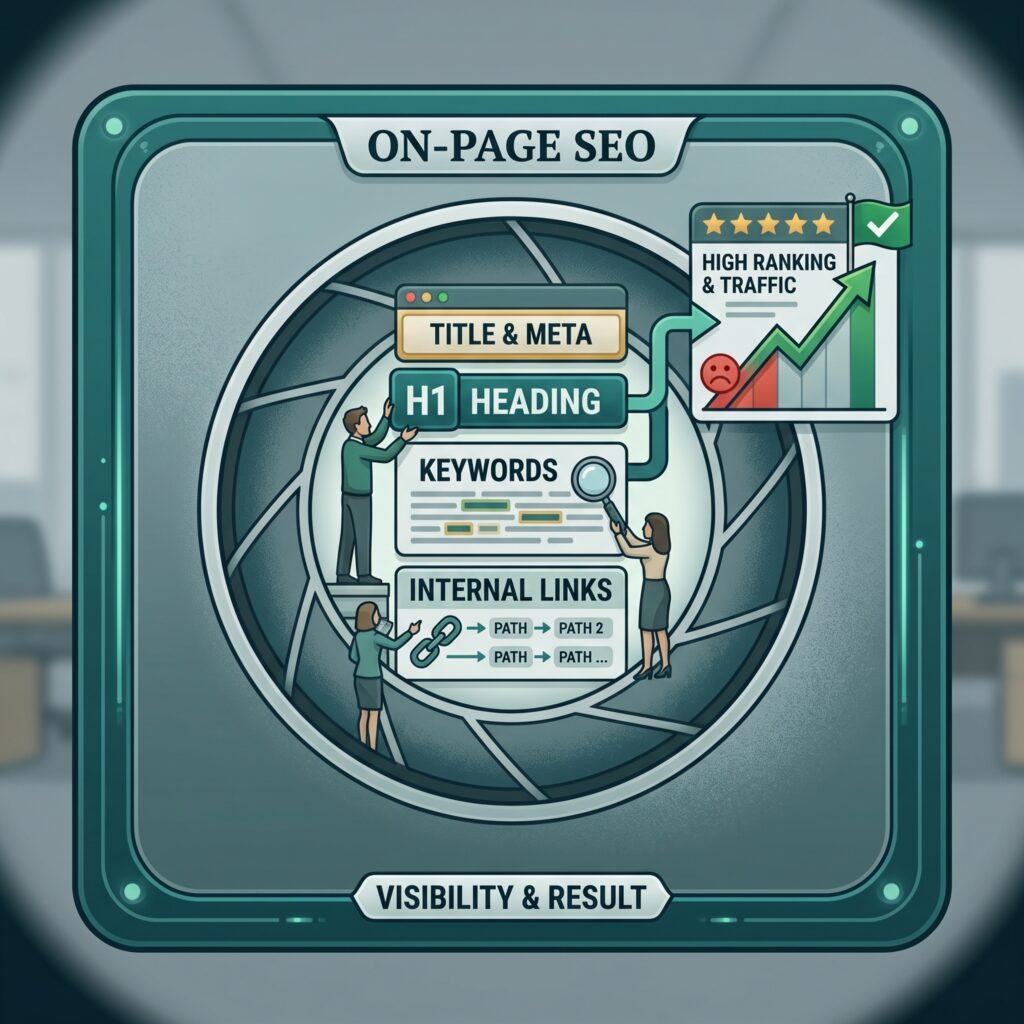
In simple terms, it is the practice of optimizing individual web pages so that they rank higher and earn more relevant traffic in search engines. Unlike off-page SEO (which involves external signals like backlinks), on-page SEO is entirely within your control. It encompasses both the visible content on your site and the HTML source code happening behind the scenes. When executed correctly, it acts as a clear roadmap, telling Google’s algorithm exactly what services you offer and where you offer them.
Title Tags & Meta Descriptions
The most critical component of on-page SEO is your title tags and meta descriptions. These are the snippets of text that appear in Google’s search results. Your title tag carries massive weight for ranking; it should accurately describe the page’s content while naturally incorporating your primary keywords and your location. The meta description, while not a direct ranking factor, acts as your digital storefront window. A compelling, action-oriented description dramatically increases the chances that a user will actually click on your link instead of your competitor’s.
Heading Structure
Another major pillar of on-page SEO is the strategic use of header tags (H1, H2, H3). Search engines use these headers to understand the hierarchy and context of your content. Your H1 tag is your main headline and should only be used once per page. Your H2s and H3s break up the content into digestible sections. By naturally weaving your targeted local keywords into these headers, you signal to Google that your page is a comprehensive, highly relevant resource for that specific topic.
Image Optimization
Image optimization is a frequently overlooked aspect of on-page SEO. Search engine crawlers cannot “see” images; they rely on the text associated with them. If you are uploading images with file names like “IMG_4921.jpg,” you are missing a massive optimization opportunity. Renaming your files descriptively and adding keyword-rich “alt text” not only improves your site’s web accessibility for visually impaired users but also gives Google more context about your page, helping you appear in image search results.
Internal Linking
Internal linking is also a vital strategy for effective on-page SEO. By linking from one page on your website to another, you help establish an information hierarchy and spread link equity throughout your site. For example, if you write a blog post about seasonal maintenance, linking that post to your core “Services” page helps search engines understand the relationship between the two. It also keeps human visitors on your website longer, which sends positive user experience signals back to Google.
Your Partner for On-Page SEO
Ultimately, neglecting on-page SEO is like building a stunning retail store in the middle of a desert without any roads leading to it. It requires meticulous attention to detail, technical know-how, and ongoing adjustments. If you want to ensure your website is perfectly tuned to capture local traffic, the experts at Handsome Meatball are here to help. We perform comprehensive on-page audits and implement the exact tweaks necessary to push your small business to the top of the search results.